Home / How Rock Anchoring Improves Stability and Safety in Infrastructure Development
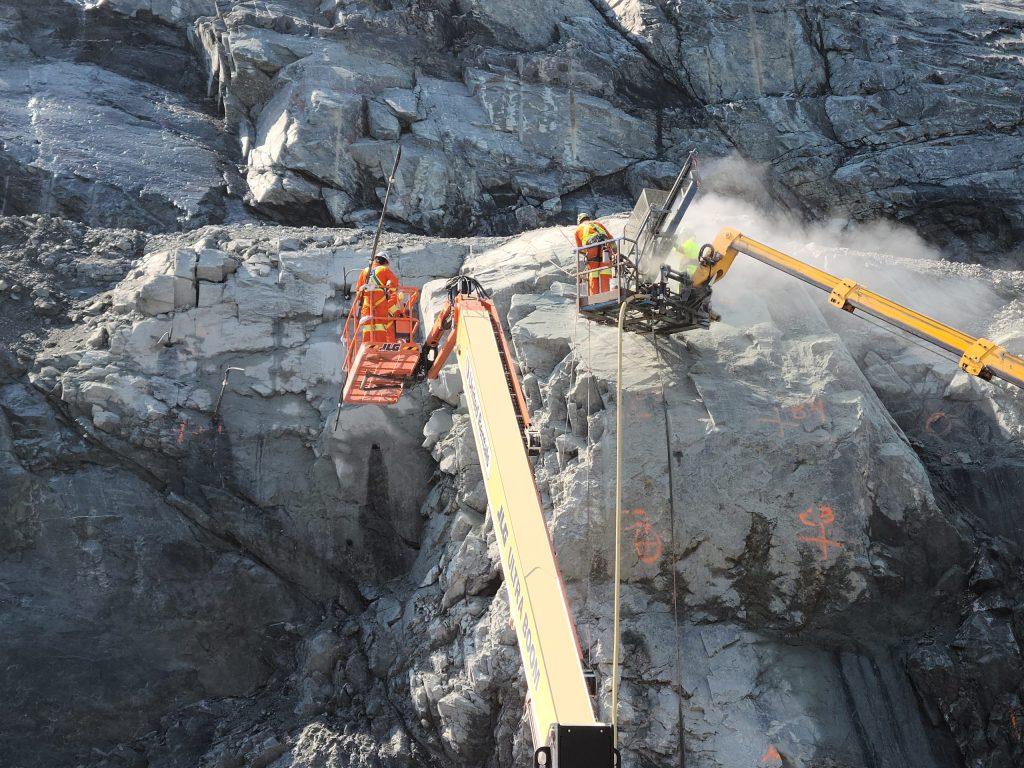
As infrastructure projects become increasingly ambitious, engineers face the challenge of constructing safe and stable structures in difficult geological conditions. Rock anchoring has emerged as one of the most effective ground support techniques used to strengthen rock masses and improve structural stability.
From highways and bridges to tunnels and retaining walls, rock anchoring plays a vital role in ensuring infrastructure can withstand both natural and operational forces.
Rock anchoring is a technique that involves installing high-strength steel tendons, bars, or cables into rock formations to transfer loads and stabilize structures.
The anchors are inserted into drilled holes and secured using grout. Once tensioned, they create compressive forces that reinforce the surrounding rock mass.
This process significantly enhances the load-bearing capacity and stability of infrastructure systems.
Rock anchors provide additional resistance against movement and displacement, helping maintain structural integrity under varying conditions.
By stabilizing slopes, retaining walls, and excavations, rock anchoring reduces the likelihood of failures that could endanger workers and the public.
Compared with extensive reconstruction or alternative support systems, rock anchoring often delivers effective results at lower costs.
Rock anchoring systems can be customized to suit different geological conditions and engineering requirements.
Because the technique requires relatively limited excavation, it helps reduce disruption to surrounding environments.
Rock anchoring is widely used in:
Steep slopes are susceptible to landslides and erosion. Anchors help secure unstable rock masses and improve long-term safety.
Anchors provide additional support to retaining walls subjected to earth pressures.
Underground projects frequently use rock anchors to reinforce excavation surfaces and maintain stability.
Bridge structures often rely on rock anchoring to resist uplift and lateral forces.
Anchors strengthen aging hydraulic structures and improve resistance to external loads.
Successful rock anchoring depends heavily on proper design and execution. Engineers must evaluate geological conditions, determine appropriate anchor capacities, and implement rigorous quality control measures.
Professional contractors possess the expertise required to ensure anchors perform effectively throughout their service life.
Regular inspections and monitoring are essential for maintaining anchor performance. Long-term evaluation helps identify potential issues before they affect structural safety.
Preventive maintenance contributes to extended infrastructure lifespan and reduced repair costs.
Rock anchoring has become an indispensable solution in modern infrastructure development. Its ability to improve stability, enhance safety, and adapt to challenging ground conditions makes it a preferred choice for engineers worldwide.
As construction projects continue to evolve in complexity and scale, reliable ground support systems such as rock anchoring will remain critical to delivering safe, durable, and resilient infrastructure.
Drilltek Projects Private Limited. ©2026 | All Rights Reserved | Designed by Wedoodles.com